자유이주(민)
2025
송상현
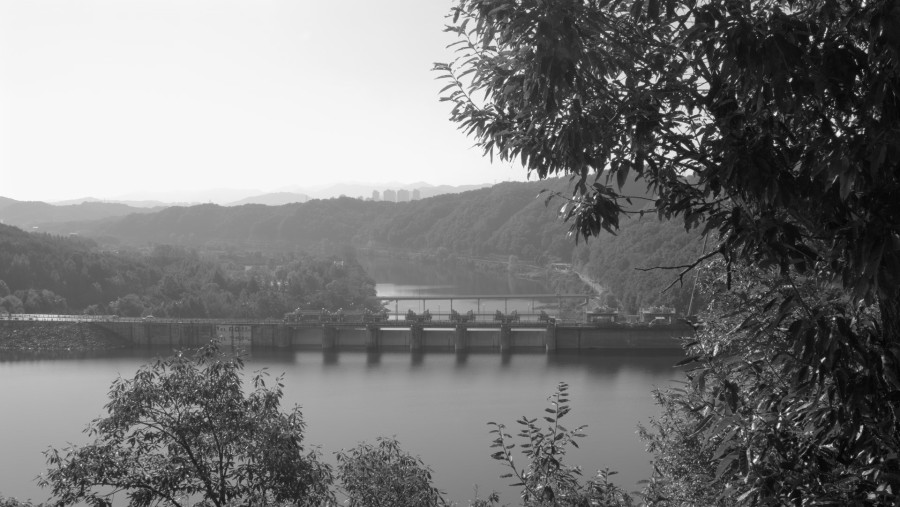
1980년, 대청댐은 충청의 지도를 바꾸었다. 강은 막혔고 땅은 물에 잠겼다. 댐이 들어서자 사람들도 떠나야 했다. 군사정권 시절, ‘나라가 하는 일’에 저항하기란 불가능에 가까웠다. 충청의 사람들은 전국 각지로 흩어져 새로운 삶의 터를 찾아야 했다. 덕유리 주민들은 포승읍 원정5리에 정착하며 고향의 느티나무를 옮겨 심었다.
어렸을 적 나에게 대청호는 소풍지였다. 그러나 나중에서야 그 풍경이 상실 위에 세워진 것임을 알았다. 그때부터 나는 대청호와 관련된 장소들을 기록하기 시작했다. 그것은 어긋난 시선을 확인하는 행위이자, 완결된 역사의 공백을 찾아보려는 일종의 훼방이었다. 대청호와 포승읍, 그 사이의 길을 오가며 나는 “과거와 현재를 어떻게 이어볼 수 있을까”를 생각했다. 이어지지 않는 것을 억지로라도 연결하고 싶었다.
떠나는 일은 타의였으나, 정부는 그 과정을 ‘자유이주’라 불렀다. 그 단어는 오래전부터 나를 붙잡아 두었다. 믿을 수 없다는 걸 알면서도, 나는 그 말을 한 번쯤 믿어보기로 했다. 믿는다는 건, 그것이 만들어낸 모순을 끝까지 따라가 보겠다는 뜻이었다.
‘자유이주’를 이미지 검색창에 입력하면 철새들이 하늘을 가로지르는 영상이 쏟아진다. 계절을 따라 움직이고, 바람을 타며 되돌아오는 생의 궤적. 나는 그 이미지를 보며 트럭에 짐을 싣는 사람들의 손짓을 떠올린다. 철새의 날갯짓과 수몰민의 몸짓은 전혀 닮지 않았지만, 나는 그 둘을 겹쳐본다.
거대한 서사 앞에서 무슨 말을 할 수 있을까. ’자유’라는 단어는 그 길 위에서 계속 흔들린다. 철새는 돌아오지만, 수몰민은 돌아오지 못한다. 그 사이의 경계에서 나는 여전히 머뭇거리며 나의 말을 찾는다. 어쩌면, 그 흔들림이야말로 내가 다다를 수 있는 유일한 형태의 ‘자유’일지도 모르겠다.
Free Migration
2025
Song Sanghyun
In 1980, the Daecheong Dam reshaped Chungcheong’s map. The river was blocked, and the land drowned. Under the military regime, resisting what was called “a national project” was nearly impossible. People of Chungcheong were scattered across the country seeking new homes. The residents of Deokyu-ri settled in Wonjeong 5-ri, Poseung-eup, and replanted the zelkova tree from their hometown.
When I was young, Daecheong Lake was a picnic site. Only later did I realize that its beauty stood upon loss. Since then, I have recorded places around the lake—an act of tracing absence and disturbing completed history. Traveling between Daecheong Lake and Poseung-eup, I kept wondering how the past and present might still meet. I wanted, even forcibly, to bind what could not be joined.
Leaving was not a choice, yet the government called it “voluntary migration.” The phrase has stayed with me. Knowing it was false, I tried to believe it once—if only to follow its contradictions to the end.
Typing “free migration” into an image search brings flocks of birds crossing the sky. They move with the seasons, riding the wind, returning along unseen paths. Watching them, I think of people loading their belongings onto trucks. The wings and gestures of the displaced bear no resemblance, yet I overlap them in my mind.
What can be said before such a vast history? The word freedom keeps trembling along that path. The birds return, but the displaced do not. In that space between, I still hesitate, searching for words. Perhaps that trembling itself is the only form of freedom I can reach.